Choosing the right laboratory equipment is an important decision for schools, colleges, universities, research centers, hospitals, factories, and technical training institutes. The right equipment can improve accuracy, safety, productivity, and the overall quality of laboratory work. However, with many local and imported products available in the market, choosing the best option can be challenging.
If you are searching for how to choose lab equipment Bangladesh, you should consider more than just the price. Quality, accuracy, durability, after-sales service, warranty, spare parts, and supplier reputation are also important. This guide explains the key factors you should check before buying laboratory equipment in Bangladesh.
1. Understand Your Laboratory Requirements
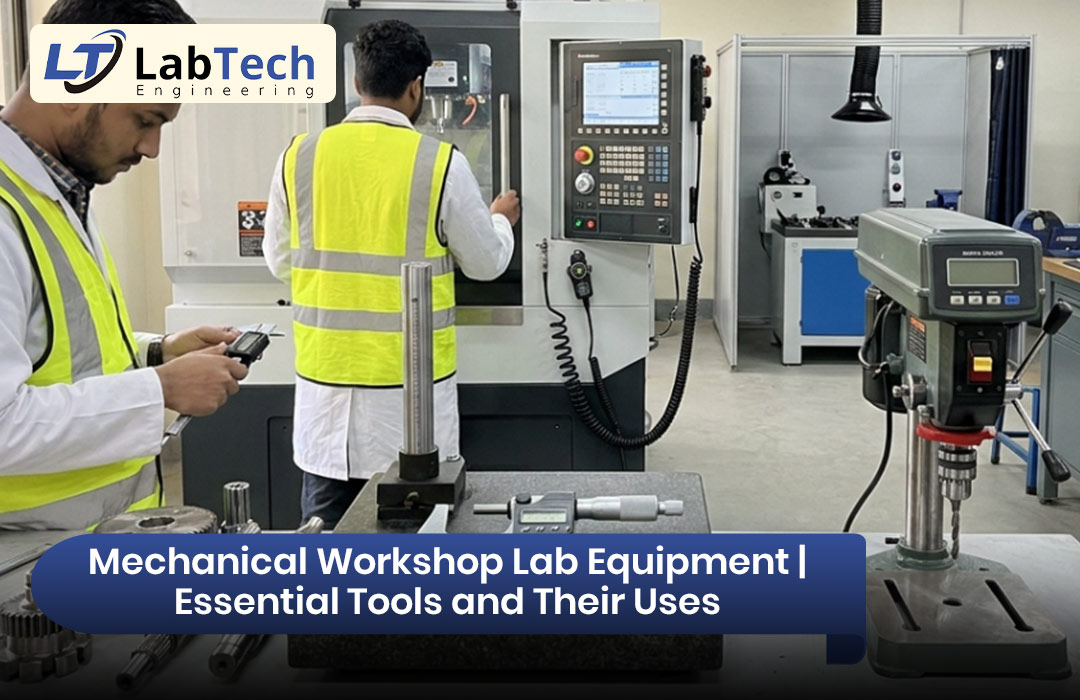
The first step is to understand exactly what your laboratory needs. Different laboratories require different types of equipment. For example, a mechanical engineering laboratory may need testing machines, measuring tools, workshop equipment, and thermodynamics equipment. A medical laboratory may require microscopes, centrifuges, analyzers, and other diagnostic instruments.
Before contacting a supplier, make a list of the equipment you need. Consider the type of experiments, tests, training, or research activities you will perform. This helps you avoid buying equipment that is unnecessary or unsuitable for your laboratory.
2. Check Equipment Quality and Accuracy
Quality should be one of your main priorities when choosing laboratory equipment. Low-quality equipment may have a lower initial cost, but it can create problems such as inaccurate results, frequent repairs, and short product life.
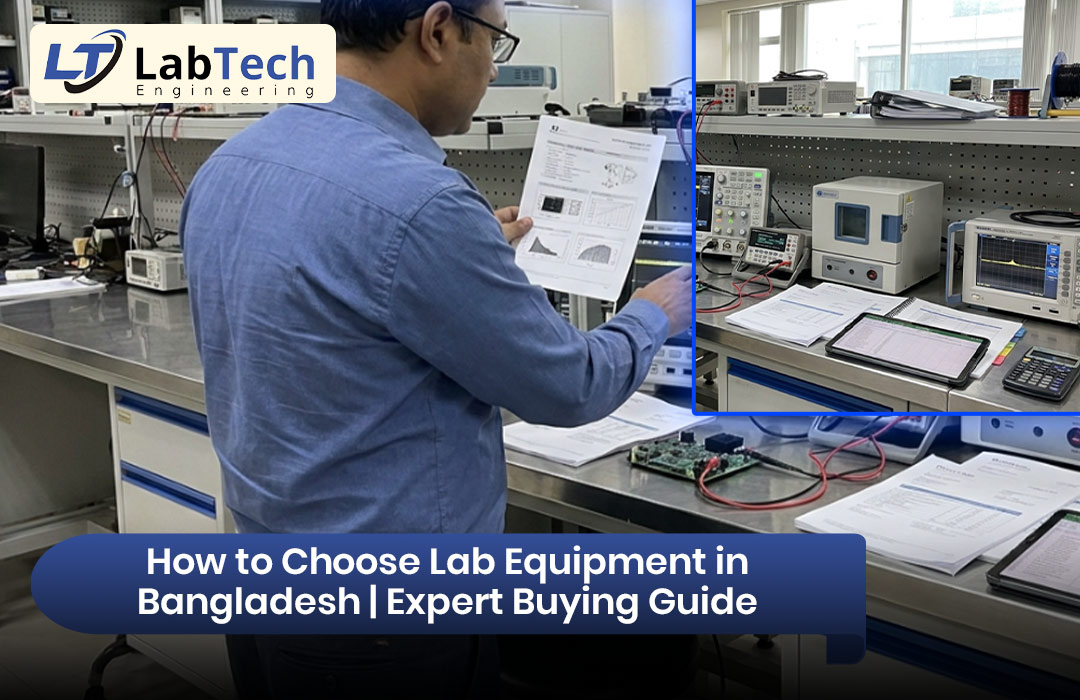
For measuring and testing equipment, accuracy is especially important. Check the equipment’s specifications, measurement range, resolution, tolerance, and other technical features. If possible, choose equipment that meets recognized quality or industry standards.
When learning how to choose lab equipment Bangladesh, always compare the technical specifications instead of choosing a product only because it has a lower price.
3. Consider Local and Imported Lab Equipment
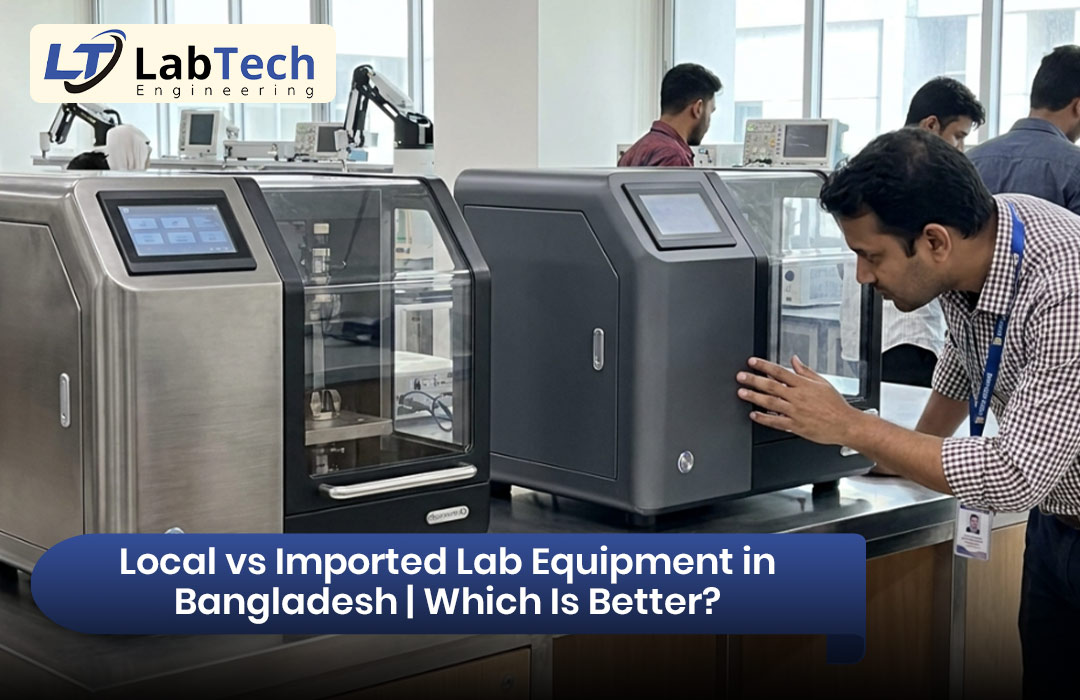
Bangladesh has both local and imported laboratory equipment suppliers. Imported equipment can provide advanced technology and specialized features, while local equipment may offer easier availability, faster support, and lower transportation costs.
The best choice depends on your laboratory requirements and budget. Do not assume that imported equipment is always better. Compare the quality, specifications, warranty, spare parts, technical support, and total cost before making a decision.
A reliable lab equipment supplier in Bangladesh should be able to explain the differences between available local and imported options.
4. Compare Prices and Total Cost
Price is an important factor, but the cheapest product is not always the best option. When comparing laboratory equipment prices in Bangladesh, consider the total cost of ownership.
The total cost may include:
- Equipment purchase price
- Delivery and transportation
- Installation
- Training
- Maintenance
- Spare parts
- Calibration
- Repair costs
For example, equipment with a slightly higher purchase price may save money over time if it has better durability and lower maintenance requirements.
Therefore, when deciding how to choose lab equipment Bangladesh, compare long-term value rather than focusing only on the initial price.
5. Check Warranty and After-Sales Service
Warranty and after-sales support are very important when purchasing laboratory equipment. Even high-quality equipment may require maintenance or technical support after installation.
Before buying, ask the supplier about the warranty period and what the warranty covers. Also check whether the supplier provides installation, troubleshooting, maintenance, and repair services.
You should also ask whether spare parts are available in Bangladesh. If a small component fails and replacement parts are difficult to find, the equipment may remain unused for a long time.
A supplier offering strong after-sales service in Bangladesh can help reduce downtime and protect your investment.
6. Look for Calibration and Certification
Calibration is essential for many laboratory instruments, especially equipment used for measurement and testing. Regular calibration helps ensure that the equipment provides reliable and accurate results.
Before purchasing, ask the supplier about calibration requirements and available calibration services. Check whether calibration certificates are provided when applicable.
You should also review relevant certifications and standards for the equipment. The required standards will depend on the type of laboratory and the intended application.
7. Check Safety Features
Laboratory equipment should be safe for students, technicians, researchers, and other users. Safety should never be ignored just to reduce costs.
Look for safety features such as protective covers, emergency stop functions, overload protection, temperature controls, warning systems, and safe operating procedures where relevant.
Also check whether the supplier provides an operating manual and user training. Proper training can help reduce accidents and equipment damage.
8. Consider Equipment Size and Laboratory Space
Before buying any equipment, measure the available laboratory space. Large machines may require additional working space, electrical connections, ventilation, or other installation requirements.
Check the equipment dimensions and installation requirements carefully. Make sure there is enough space for operators to use the equipment safely and comfortably.
For engineering and technical laboratories, also consider whether the floor can support heavy equipment and whether suitable power connections are available.
9. Evaluate the Supplier’s Reputation
Choosing a reliable supplier is just as important as choosing the right equipment. A trusted educational lab equipment supplier should have experience supplying equipment to schools, universities, colleges, research institutions, or industrial organizations.
Before placing an order, check:
- Supplier experience
- Product range
- Customer reviews
- Previous projects
- Warranty policy
- Technical support
- Delivery capability
- Availability of spare parts
You can also ask for product catalogs, technical datasheets, quotations, and references from previous customers.
10. Ask for a Detailed Quotation
Always request a detailed quotation before making a final purchase. The quotation should clearly mention the product name, model, specifications, quantity, price, warranty, delivery time, installation, and other relevant costs.
If you are purchasing several products, compare quotations from multiple suppliers. However, do not select a supplier based only on the lowest quotation. Compare quality, service, warranty, and technical support as well.
11. Think About Future Laboratory Needs
Your laboratory requirements may increase in the future. Therefore, consider whether the equipment can support future applications or upgrades.
For example, some advanced instruments may allow additional accessories, software, modules, or testing capabilities to be added later. Choosing scalable equipment can reduce the need to replace the entire system when your laboratory expands.
This is especially important for universities, technical institutions, industrial training centers, and research laboratories.
Common Mistakes to Avoid When Buying Lab Equipment
Knowing what not to do is also important when deciding how to choose lab equipment Bangladesh. Avoid purchasing equipment only because it is cheap. Do not ignore technical specifications, warranty conditions, calibration, or after-sales service.
Other common mistakes include buying equipment without checking laboratory space, failing to confirm delivery and installation requirements, and not checking the availability of spare parts.
Taking time to compare products and suppliers can help you make a better long-term investment.
Final Thoughts
Choosing laboratory equipment requires careful planning. Whether you need engineering laboratory equipment, technical education equipment, university laboratory equipment, or industrial training equipment in Bangladesh, you should evaluate quality, accuracy, safety, price, warranty, calibration, supplier reputation, and after-sales service.
If you are researching how to choose lab equipment Bangladesh, start by identifying your laboratory requirements and then compare products based on specifications and long-term value. Working with a reliable laboratory equipment supplier can also make the purchasing process easier and help you get the right equipment for your institution.
The right laboratory equipment is not simply an expense. It is an investment in accurate testing, effective education, research quality, workplace safety, and long-term laboratory performance.
Frequently Asked Questions
1. How do I choose lab equipment in Bangladesh?
Identify your laboratory needs first, then compare equipment based on quality, accuracy, price, warranty, safety, calibration, and after-sales support.
2. Should I buy local or imported lab equipment?
Both can be good options. Compare specifications, quality, price, warranty, spare parts, and technical support before making a decision.
3. Why is after-sales service important?
After-sales service helps with installation, maintenance, repairs, troubleshooting, and spare parts, reducing equipment downtime.
4. What should I check before buying laboratory equipment?
Check technical specifications, quality, accuracy, safety features, warranty, calibration, supplier reputation, delivery, and maintenance support.
5. How can I find a reliable lab equipment supplier in Bangladesh?
Compare supplier experience, product quality, customer feedback, technical support, warranty, product range, and previous supply projects.