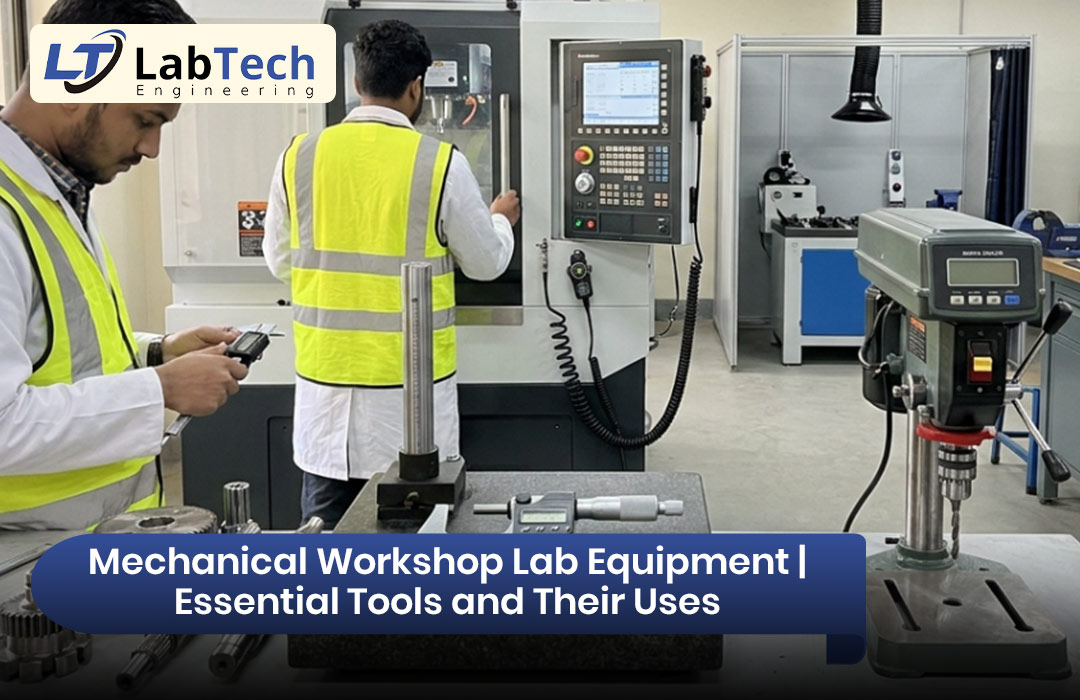
Mechanical engineering students need both theoretical knowledge and practical experience to understand how machines, materials, and manufacturing processes work. A well-equipped workshop laboratory helps students develop practical skills through machining, measurement, fabrication, testing, and maintenance activities. Mechanical Workshop Lab Equipment includes a wide range of machines, hand tools, measuring instruments, and safety equipment used for mechanical training and education.
From basic workshop practices to advanced manufacturing techniques, these tools allow students to learn how different machines operate and how engineering components are produced. This guide explains the most important Mechanical Workshop Lab Equipment, their uses, and why they are essential for engineering education.
What Is Mechanical Workshop Lab Equipment?
Mechanical Workshop Lab Equipment refers to the machines, tools, instruments, and accessories used in mechanical engineering workshops and training laboratories. These tools are designed to help students understand practical manufacturing and mechanical processes.
A typical mechanical workshop may include equipment for machining, welding, fitting, drilling, grinding, sheet metal work, carpentry, and measurement. The exact equipment required depends on the educational level, laboratory size, and training objectives.
Good workshop equipment should be durable, easy to operate, safe, and suitable for regular student practice. Proper equipment selection also helps educational institutions provide better hands-on training.
Why Is Mechanical Workshop Lab Equipment Important?
Practical learning is an important part of mechanical engineering education. Students can understand engineering concepts more effectively when they can apply classroom knowledge in a real workshop environment.
Mechanical Workshop Lab Equipment helps students:
- Learn practical machining and manufacturing skills
- Understand how workshop machines operate
- Practice measuring and inspection techniques
- Develop problem-solving and technical skills
- Learn proper tool handling and workshop safety
- Understand different manufacturing processes
- Gain experience with real engineering materials
- Prepare for industrial and technical careers
Hands-on training also helps students become familiar with common workshop procedures before entering professional engineering environments.
Essential Mechanical Workshop Lab Equipment
A mechanical workshop requires different types of equipment for different practical activities. The following are some of the most commonly used tools and machines.
1. Lathe Machine
A lathe machine is one of the most important machines in a mechanical workshop. It is mainly used for turning cylindrical workpieces. Students can learn operations such as facing, turning, threading, drilling, and knurling.
Lathe machines help students understand cutting tools, workpiece rotation, feed rates, and machining principles. Different types of lathes can be selected depending on the training requirements.
2. Drilling Machine
A drilling machine is used to create holes in different materials. It is commonly used for drilling operations in metal and other engineering materials.
Students can learn how to select drill bits, set the correct speed, hold the workpiece securely, and produce accurate holes. Bench drilling machines and pillar drilling machines are common choices for educational workshops.
3. Milling Machine
Milling machines are used to remove material from a workpiece using a rotating cutting tool. They can perform operations such as slotting, cutting, drilling, and producing flat or contoured surfaces.
A milling machine gives students practical knowledge of modern machining processes and helps them understand how cutting parameters affect the final product.
4. Grinding Machine
Grinding machines are used for finishing and sharpening operations. They can remove small amounts of material and improve surface quality.
In mechanical workshops, bench grinders are often used for sharpening cutting tools and performing basic grinding tasks. Proper safety procedures are essential when operating grinding equipment.
5. Welding Equipment
Welding equipment is important for joining metal components. Common welding methods include arc welding, MIG welding, TIG welding, and gas welding.
Students can learn how heat affects metals and how different welding techniques are used for fabrication and repair work. Welding equipment should always be operated with appropriate protective gear and proper ventilation.
6. Bench Vice
A bench vice is a basic but essential workshop tool. It holds a workpiece firmly during cutting, filing, drilling, and other manual operations.
Although simple, a bench vice is frequently used in mechanical training because it helps students perform fitting and hand-tool operations accurately.
7. Measuring Instruments
Accurate measurement is essential in mechanical engineering. Common measuring tools include:
- Vernier calipers
- Micrometers
- Steel rulers
- Dial gauges
- Height gauges
- Bevel protractors
- Measuring tapes
These instruments help students measure length, diameter, thickness, depth, angles, and other dimensions. Learning accurate measurement helps reduce manufacturing errors and improves product quality.
8. Hand Tools
Hand tools are another important category of Mechanical Workshop Lab Equipment. Common workshop hand tools include hammers, screwdrivers, spanners, wrenches, files, pliers, chisels, hacksaws, and Allen keys.
Students use these tools for fitting, assembly, adjustment, repair, and maintenance tasks. Proper tool selection is important because using the wrong tool can damage both the workpiece and the equipment.
9. Sheet Metal Tools
Sheet metal equipment is used to cut, bend, shape, and join thin metal sheets. Common tools include snips, stakes, hammers, folders, and sheet metal shears.
These tools help students understand fabrication techniques and develop practical skills in forming metal components.
10. Workshop Safety Equipment
Safety equipment is a critical part of every mechanical workshop. It protects students, instructors, and technicians from common workshop hazards.
Important safety equipment includes:
- Safety goggles
- Protective gloves
- Ear protection
- Safety shoes
- Face shields
- Welding helmets
- Fire extinguishers
- First-aid kits
- Protective clothing
Safety training should be provided before students use machines or power tools.
How to Choose Mechanical Workshop Lab Equipment
Choosing the right Mechanical Workshop Lab Equipment requires careful planning. Educational institutions should first identify the practical courses and manufacturing processes that students need to learn.
Consider the following factors:
Training Requirements
Equipment should match the laboratory curriculum. A basic workshop may require lathes, drilling machines, welding equipment, hand tools, and measuring instruments, while an advanced laboratory may need CNC machines and specialized testing equipment.
Quality and Durability
Workshop equipment is used frequently, so durability is important. High-quality machines can provide reliable performance and reduce maintenance problems.
Safety Features
Safety should be one of the main considerations when purchasing workshop equipment. Machines should include suitable guards, emergency controls, and other safety features where applicable.
Laboratory Space
Before purchasing large machines, check the available floor space, electrical requirements, ventilation, and installation requirements.
Maintenance and Spare Parts
Choose equipment that can be maintained easily and has reliable access to spare parts and technical support. This can reduce long-term operating costs.
Mechanical Workshop Lab Equipment for Educational Institutions
Schools, colleges, universities, polytechnic institutes, and vocational training centers can use Mechanical Workshop Lab Equipment to create practical learning environments.
A complete workshop setup may combine basic hand tools with machining equipment, welding machines, measurement instruments, fabrication tools, and safety systems. The equipment should be selected based on student capacity, course requirements, available space, and budget.
For institutions planning a new workshop, it is useful to create an equipment list before purchasing. This helps ensure that essential tools are included and unnecessary equipment is avoided.
Benefits of a Well-Equipped Mechanical Workshop
A properly equipped workshop provides several benefits. Students gain practical experience and become more confident when working with machines and tools. Instructors can demonstrate manufacturing processes more effectively, while students can complete practical projects under controlled conditions.
A good workshop also helps bridge the gap between academic learning and industrial requirements. Students who understand how workshop machines and tools work can adapt more easily to manufacturing, maintenance, production, and mechanical engineering jobs.
Final Thoughts
Mechanical Workshop Lab Equipment plays an important role in developing practical mechanical engineering skills. Equipment such as lathe machines, drilling machines, milling machines, grinding machines, welding equipment, measuring instruments, hand tools, and safety gear provides students with valuable hands-on experience.
When selecting workshop equipment, institutions should focus on quality, safety, durability, training requirements, available space, and maintenance support. A well-planned mechanical workshop can give students the practical knowledge they need to understand manufacturing processes and prepare for future engineering careers.
Frequently Asked Questions
1. What is Mechanical Workshop Lab Equipment?
It includes machines, tools, measuring instruments, and safety equipment used for practical mechanical engineering training.
2. What is the most important workshop machine?
A lathe machine is one of the most important machines because it teaches students several basic machining operations.
3. What measuring tools are used in a mechanical workshop?
Common tools include Vernier calipers, micrometers, dial gauges, steel rulers, and height gauges.
4. Why is safety equipment important in a workshop?
Safety equipment helps protect students and workers from injuries caused by machines, sharp tools, heat, noise, sparks, and other workshop hazards.
5. How do I choose workshop lab equipment?
Consider the training requirements, equipment quality, safety features, laboratory space, budget, maintenance needs, and availability of spare parts.