
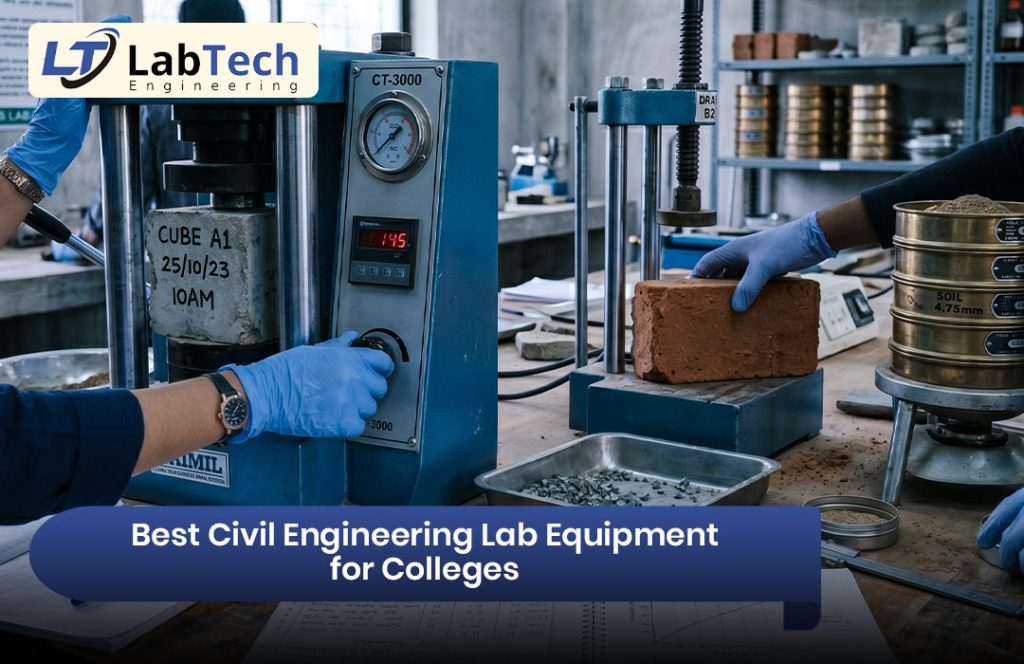
Civil Engineering is a cornerstone of infrastructure development, and hands-on laboratory training is vital for preparing competent engineers in Bangladesh. Colleges and polytechnics need reliable, modern civil engineering lab equipment to conduct accurate experiments in materials testing, soil mechanics, surveying, fluid flow, and structural analysis. LabTech Engineering, a trusted supplier in Bangladesh, offers high-quality tools and complete lab solutions tailored to academic needs, helping institutions deliver industry-standard education.
Importance of Civil Engineering Lab Equipment
Quality lab equipment ensures precise measurements, repeatable results, and safe learning environments. It bridges theoretical concepts with practical applications, enhances student skills in testing and analysis, supports research, and helps institutions achieve accreditation. In Bangladesh’s growing construction sector, well-equipped labs produce graduates ready to tackle real-world challenges like sustainable infrastructure and disaster-resilient designs.
Essential Surveying Lab Equipment
Surveying forms the basis of all civil projects. Key equipment includes:
- Automatic and digital levels
- Theodolites (digital and vernier)
- Total stations
- GPS/GNSS receivers
- Prismatic compasses
- Plane tables and ranging rods
- Chains, tapes, and leveling staffs
These tools teach students land measurement, mapping, contouring, and setting out techniques essential for construction planning.
Top Concrete Testing Equipment
Concrete is the most widely used construction material. Essential testing tools include:
- Compression Testing Machines (digital/automatic, various capacities)
- Flexural Testing Machines
- Slump cones and flow tables
- Cube, beam, and cylindrical moulds
- Vibrating tables and machines
- Curing tanks
- Rebound hammers (non-destructive testing)
These enable compressive strength, workability, and durability tests, ensuring compliance with standards like ASTM and BS.
Must-Have Soil Testing Instruments
Geotechnical knowledge prevents foundation failures. Critical instruments are:
- Proctor compaction apparatus (standard and modified)
- California Bearing Ratio (CBR) test machines
- Direct shear apparatus
- Triaxial testing systems
- Consolidation apparatus
- Liquid and plastic limit devices
- Permeability apparatus (constant and falling head)
- Core cutters and sand replacement apparatus
These help analyze soil properties like density, shear strength, compressibility, and permeability.
Key Fluid Mechanics Lab Equipment
Understanding fluid behavior is crucial for hydraulics and water resources. Must-have equipment includes:
- Bernoulli’s theorem apparatus
- Venturi meters and orifice meters
- Reynolds apparatus
- Hydraulic benches
- Pipe friction and minor losses setups
- Pelton wheel and Francis turbine test rigs
- Centrifugal and reciprocating pump testers
Modern setups often feature digital sensors for real-time data acquisition.
Structural Engineering Lab Essentials
Structural labs focus on material behavior under load:
- Universal Testing Machines (UTM) for tensile, compression, and bending tests
- Beam deflection apparatus
- Three-hinged and two-hinged arch setups
- Truss analysis models
- Column buckling test frames
- Strain gauges and data loggers
These tools demonstrate stress-strain relationships, deflection, and failure modes.
Modern Transportation Engineering Tools
Transportation labs support highway and pavement design:
- Marshall stability test apparatus
- Automatic Marshall compactors
- Los Angeles abrasion machines
- Bitumen penetration and ductility testers
- Aggregate impact and crushing value apparatus
- Flakiness and elongation gauges
These ensure quality control for roads and runways.
Materials Testing Equipment for Colleges
Comprehensive materials testing includes equipment for cement, aggregates, bricks, steel, and timber. Key items: Vicat apparatus, Blaine fineness testers, Le Chatelier moulds, sieve shakers, and hardness testers. These support quality assurance across construction materials.
Tips for Setting Up a Civil Engineering Lab
- Assess curriculum requirements and future needs
- Prioritize safety features and calibration standards
- Plan for space, utilities, and ventilation
- Choose modular, upgradable equipment
- Include software for data analysis and simulation
- Budget for installation, training, and maintenance
- Start with core equipment and expand gradually
Choosing a Reliable Lab Equipment Supplier
Look for suppliers with:
- Wide product range from reputed brands
- Compliance with international standards
- Strong after-sales support, installation, and training
- Customization and turnkey lab setup capabilities
- Proven experience with Bangladeshi educational institutions
- Competitive pricing and timely delivery
LabTech Engineering stands out as the preferred partner in Bangladesh. They provide complete civil engineering lab solutions alongside EEE, Mechanical, and other disciplines from their Dhaka location, backed by quality products, technical expertise, and excellent customer service.
Equipping colleges with the best civil engineering lab equipment is an investment in Bangladesh’s future infrastructure. Partner with LabTech Engineering for reliable, modern solutions that elevate practical learning and research.


